
Dominus Gladiatus Guide: Ludus, Arena & Endgame
A practical Dominus Gladiatus guide: opening build, training and fatigue math, arena readiness, economy, the six Domini, and the 165-day tournament.
Dominus Gladiatus is a 165-day gladiator-school management sim, not a fighting game. You buy slaves, assign training, manage fatigue, injuries and morale, then send prepared gladiators into auto-battles while the crowd decides how much help you get. The winning habit is simple: never enter an arena with a tired, injured or demoralised fighter just because a purse looks good.
That answer sounds obvious. The first twenty days are where most runs break it. Upkeep starts charging on day one, training takes multiple days per skill rank, and a fatigue-5 gladiator has a 100% arena injury risk according to Patch 3 notes. A single bad matchup can remove your best earner for a week.
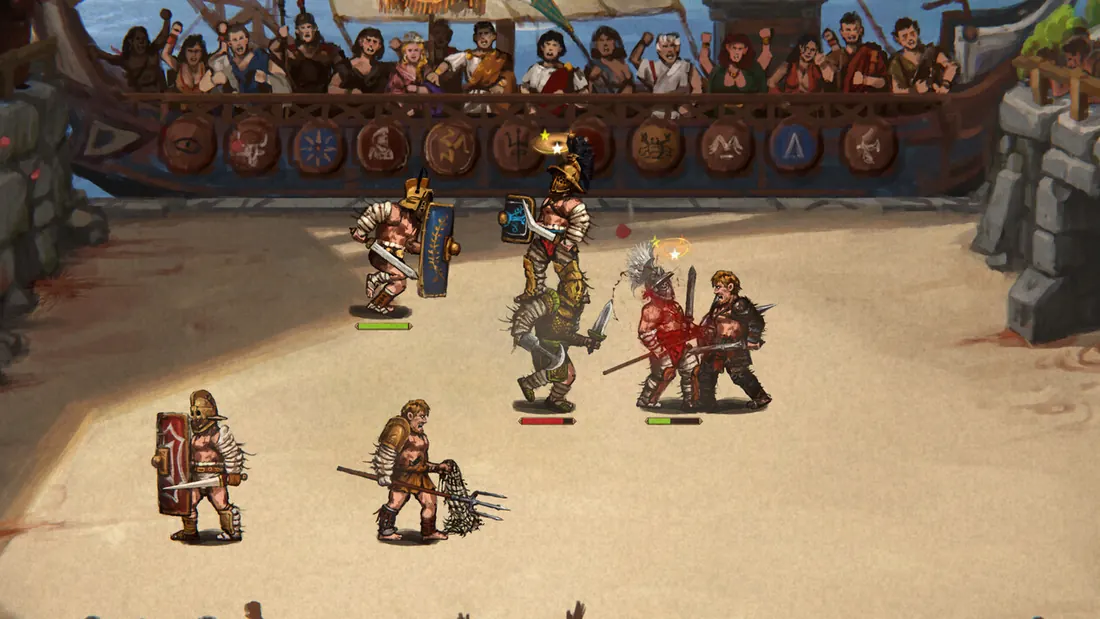
What are you actually managing each day?
The Ludus runs on a day tick. Coins drain at 1 per day plus 1 per gladiator you own, a value shown directly on the GENERAL tab. Time advances when you schedule activities, not when you click through menus, so every training block, Infirmary stay and arena trip competes for the same calendar.
Three resources gate everything else:
| Resource | Range / cost | What it controls |
|---|---|---|
| Coins | Purse-dependent | Upkeep, staff, equipment, market refresh |
| Fatigue | 0 to 5 | Injury risk, arena availability, training efficiency |
| Morale | Negative to positive | Theft, refusal to fight, suicide risk, training speed |
| Health | Base Health plus level gains | How much punishment a gladiator survives |
Health is the long-term stat. Fatigue and morale are the short-term levers you adjust before every match. Coins buy time to fix both.
The game is an auto-battler: you do not steer attacks. Your decisions happen before the gate opens, which is why readiness matters more than reflexes. The arena screen shows the opponent's class, Health and traits before you commit.
Official source: Dominus Gladiatus on Steam ↗
Which systems actually gate progress?
Five systems decide whether a run snowballs or stalls.
Training. Skills sit on an eight-slot panel and take 2-3 days for the first ranks. Combat starts at +1 attack damage and scales to +3 and +5 at higher ranks. The Palus raises training speed by 20%, and the Doctore adds another training push. Training is the only way to finish a skill rank; arena fights can add up to 10% progress on a win and 15% on a loss, but cannot complete the rank.
Fatigue. Wins add 1 Fatigue, losses add 2. Fatigue 3 carries a 25% arena injury chance, Fatigue 4 is 50%, and Fatigue 5 is 100% per the Patch 3 notes. Quarters time is not optional.
Injuries. Injuries are revealed only after the gladiator returns to the Ludus. The Infirmary heals them, but leaving early removes only the injuries covered by the time already served and restores Fatigue to its pre-admission value. Plan the full stay or do not start it.
Morale. High morale can speed training and unlock combat traits. Low morale causes theft, refusal to fight and, over several days, a displayed suicide risk. Deaths affect the whole Ludus, so a single arena death can damage the mood of every remaining fighter.
Crowd favor. You get two crowd calls per match. A Liked crowd helps both times, an Indifferent crowd helps once, and a Disliked crowd helps neither. In Ruthless difficulty the crowd starts Indifferent or Disliked and never Liked.
The fatigue system → is the one to learn first because it connects training, injuries and arena income. If you only fix one habit, stop treating a full Health bar as ready.
What is the safest opening route?
The first ten days should produce one reliable arena earner, not a full stable. Buy two or three cheap slaves, put the sturdiest one on Combat training, build the Gladiator Quarters early, and take only matchups you can win without entering Fatigue 3.
A workable opening sequence:
- Check the market's three opening recruits. Patch 4 lists the starting band at 85, 100 and 115 Health for 35, 50 and 65 coins.
- Buy the 100-115 Health recruit if you can afford the upkeep; skip the 85 Health project unless it has a strong talent.
- Build Gladiator Quarters (30 coins, 2 coins per use) before your first fatigue crisis.
- Hire the Doctore (80 coins) only after you have a gladiator training consistently.
- Add the Palus (60 coins) when training time, not coins, becomes the bottleneck.
- Take arena fights with a purse that justifies the fatigue cost. A 20-coin exhibition is not worth a 100% injury roll.
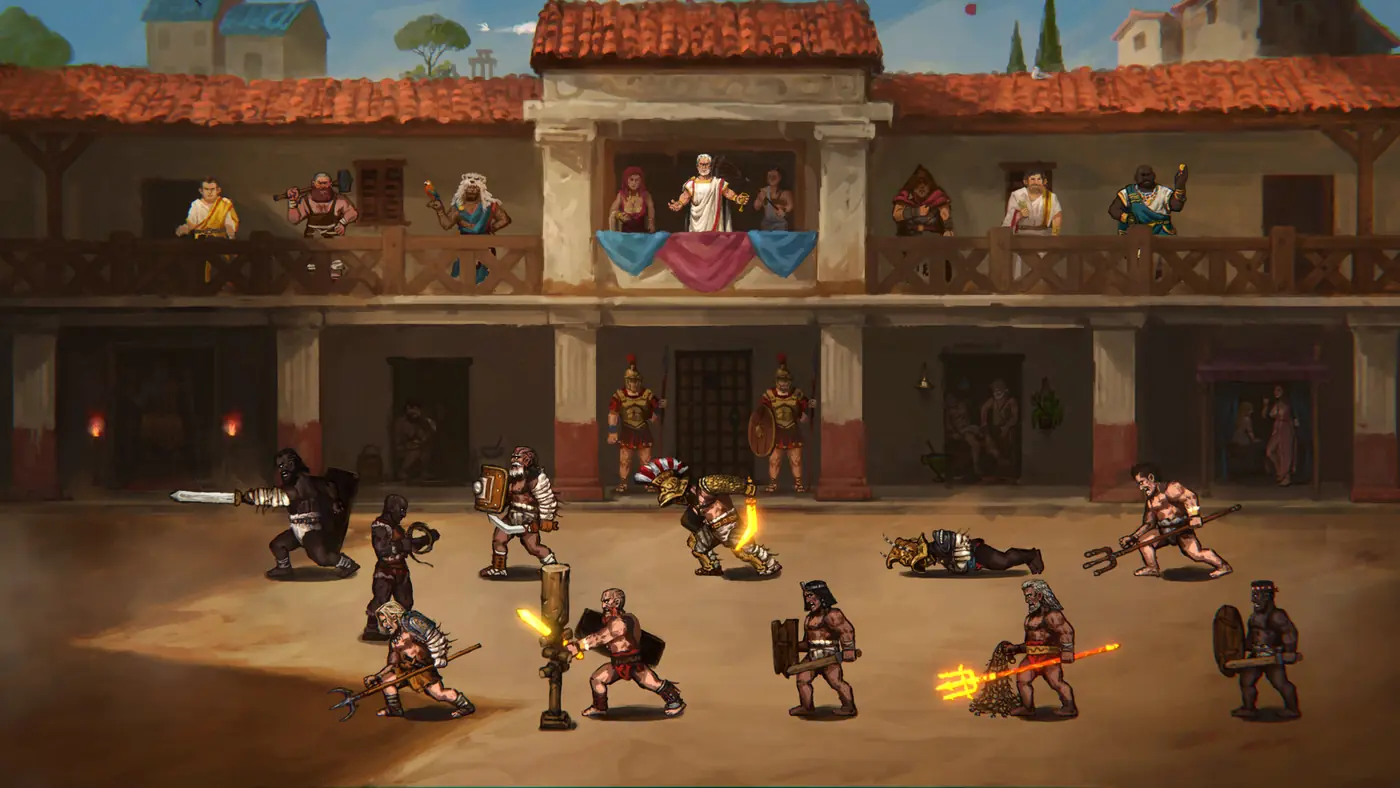
The biggest opening trap is buying a fourth gladiator because the market looks cheap. Each recruit adds 1 coin per day forever and consumes training and Quarters time. A small roster with two healthy fighters beats five hungry ones.
What wins the 165-day tournament?
The campaign is a marathon of six rival Domini, ending in the Grand Tournament Final. You do not need to win every fight. You need a roster that can absorb a bad matchup, because the tournament format and the rival powers punish one-carry strategies.
Three planning rules hold up:
- Build two credible fighters before you build a third. A single high-Health carry is easier to counter, and one injury can end the run's income.
- Match class to the opponent, not to a tier list. Secutor's Net Breaker is a direct answer to Retiarius; Scissor wants to close distance and stun; Murmillo's shield plan is the most forgiving when your gear is behind.
- Enter the final with morale and Fatigue headroom. A 55-coin purse is not worth a dead gladiator in day 150.
The Grand Tournament route → covers milestone timing, and the best gladiators tier list → explains which recruits are worth keeping.
What changes after you win?
Winning the Grand Tournament does not end the save. The Day 1 update added repeatable arena contracts: batches of ten fights, 1v1 to 5v5, including To-the-Death bouts and beast spectacles with lions and elephants. A new batch arrives roughly every 3-4 days, raises Ludus upkeep, and refreshes the rival Domini's powers. You can also retire as Dominus and review an achievement summary.
That loop is where the economy changes. Pre-tournament, you are optimizing for a finish line. Post-tournament, every contract batch raises the cost base, so a roster that was affordable at day 160 may bleed coins at day 200. The endgame contracts guide → covers the new math.
What are the most common failure states?
- Fatigue-5 arena entry. A 100% injury chance is not a risk; it is a scheduled injury.
- Infirmary early exit. You pay the admission and get partial healing.
- Low morale ignored for days. Theft and refusal are warnings; suicide risk is the terminal state.
- Upkeep blindness. Every new gladiator adds 1 coin per day, and post-game contract batches raise the base.
- Over-investing in equipment before training. A weapon does not fix a 3-day skill gap.
A 40-coin fight that costs 4 days of recovery is a net loss. Compare the purse with the replacement cost of the gladiator, not with the number on the arena card.
Official source: Dominus Gladiatus patch notes and announcements ↗
Official source: Steam achievements ↗
FAQ
Is Dominus Gladiatus an auto-battler? Yes. You choose the roster, training, equipment and matchup; the fight resolves automatically. Crowd calls are the main in-match input.
How long is the campaign? 165 days to the Grand Tournament Final, followed by repeatable arena contracts if you keep the save.
Can I play after winning the tournament? Yes. The Day 1 update added contract batches, beast spectacles and a Retire as Dominus summary.
Does difficulty change the crowd? Yes. On Ruthless the crowd starts at Indifferent or Disliked and never at Liked, so crowd-call strategies are less reliable.
More Dominus Gladiatus Guides
A Dominus Gladiatus arena readiness checklist: Fatigue, injuries, Health, morale, crowd, matchup, rules and reserve before you accept a purse.
Dominus Gladiatus best build guide: Health vs damage, skill order for Murmillo, Secutor and Scissor, Veteran bonuses, equipment priorities and team-fight roles.
Dominus Gladiatus best gladiators tier list: Health, talents, temperament and class value, plus when to buy, keep or sell a recruit from the Slave Market.
Dominus Gladiatus class guide: Murmillo, Secutor and Scissor strengths, skill synergies, Retiarius and Hoplomachus matchups, and the best first class.
How crowd favor works in Dominus Gladiatus: Liked, Indifferent and Disliked calls, two calls per fight, stones and food, favored immunity and Ruthless rules.
All six Dominus Gladiatus Domini: Titus Aurelian, Khepri Setekh, Cassius Lysandros, Aurelia Zahara, Livia Calpurnia and Decimus Amborix, powers and counterplay.
Twelve Dominus Gladiatus tips that prevent early run deaths: fatigue management, market discipline, morale warnings, crowd calls and upkeep traps.
How Dominus Gladiatus endgame contracts work after the Grand Tournament: 10-fight batches, 1v1 to 5v5, beast spectacles, rising upkeep and retirement.