
Dominus Gladiatus Wiki: Systems & Terms
A Dominus Gladiatus wiki for the release build: core systems, key numbers, buildings, staff, classes, arena rules and a glossary of every term.
This page is the reference sheet for the Dominus Gladiatus release build: the terms, the numbers that are documented, and the systems that connect them. It is not a walkthrough. Use it when a tooltip uses a word you have not seen, or when you need the exact value behind a guide's advice.
Quick answer
Dominus Gladiatus is a 165-day Ludus management sim with auto-battler arena fights. The core loop is recruit, train, manage Fatigue/injuries/morale, and schedule arena purses. The key numbers are 1 coin per day plus 1 per gladiator, Fatigue 0-5 with 25/50/100% injury risk at 3/4/5, and a 165-day campaign against six rival Domini.
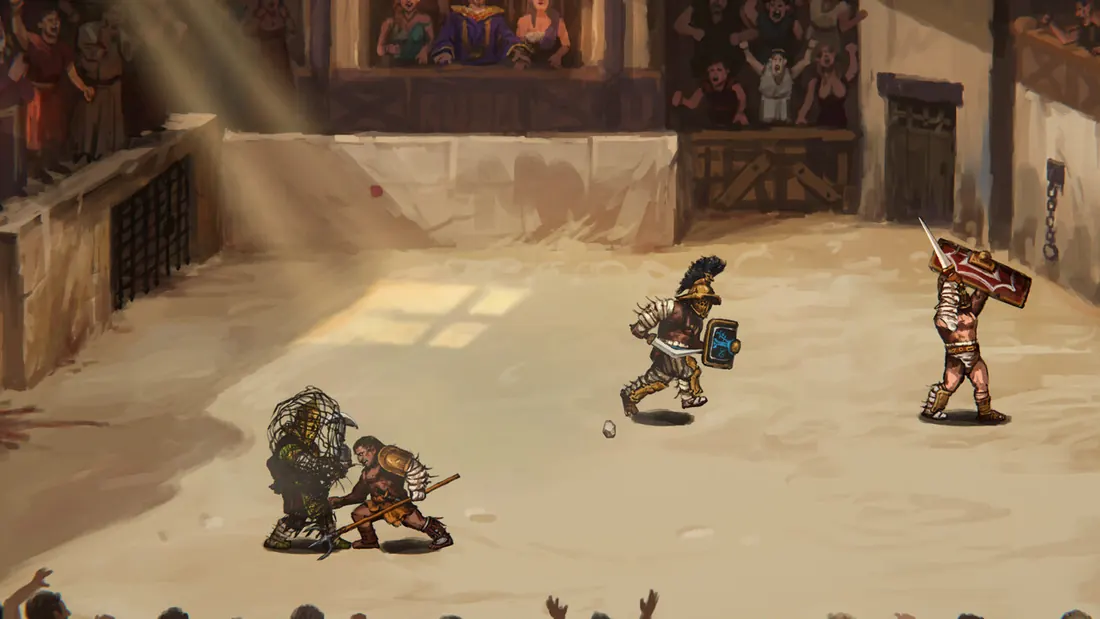
"Official" means Steam store text or patch notes, "Observed" means the release-build UI, and "Inference" means strategy derived from the systems. Use the label before you treat a number as a formula.
Core systems at a glance
| System | What it controls | Where to see it |
|---|---|---|
| Ludus | Roster, buildings, staff, daily upkeep | GENERAL / BUILD / STAFF |
| Training | Skill ranks and training time | INFO > SKILLS |
| Fatigue | Arena injury risk and availability | INFO card |
| Injuries | Recovery and Infirmary stays | INFO card / Infirmary |
| Morale | Traits, refusal, theft, suicide risk | INFO card |
| Arena | Purses, rules, crowd, opponent | Fight card |
| Economy | Coins, upkeep, taxes, debt | GENERAL tab |
| Campaign | 165 days, six Domini, final | Campaign screen |
The guide hub → explains how the systems interact; this page defines them.
Glossary of terms
Ludus - your gladiator school. It holds the roster, buildings and staff, and it charges daily upkeep.
Dominus - the owner/manager of a Ludus. The six rival Domini are Titus Aurelian, Khepri Setekh, Cassius Lysandros, Aurelia Zahara, Livia Calpurnia and Decimus Amborix.
Gladiator - a fighter recruited from the Slave Market. Each has Health, a class, a talent, a temperament, skills and a Freedom Goal.
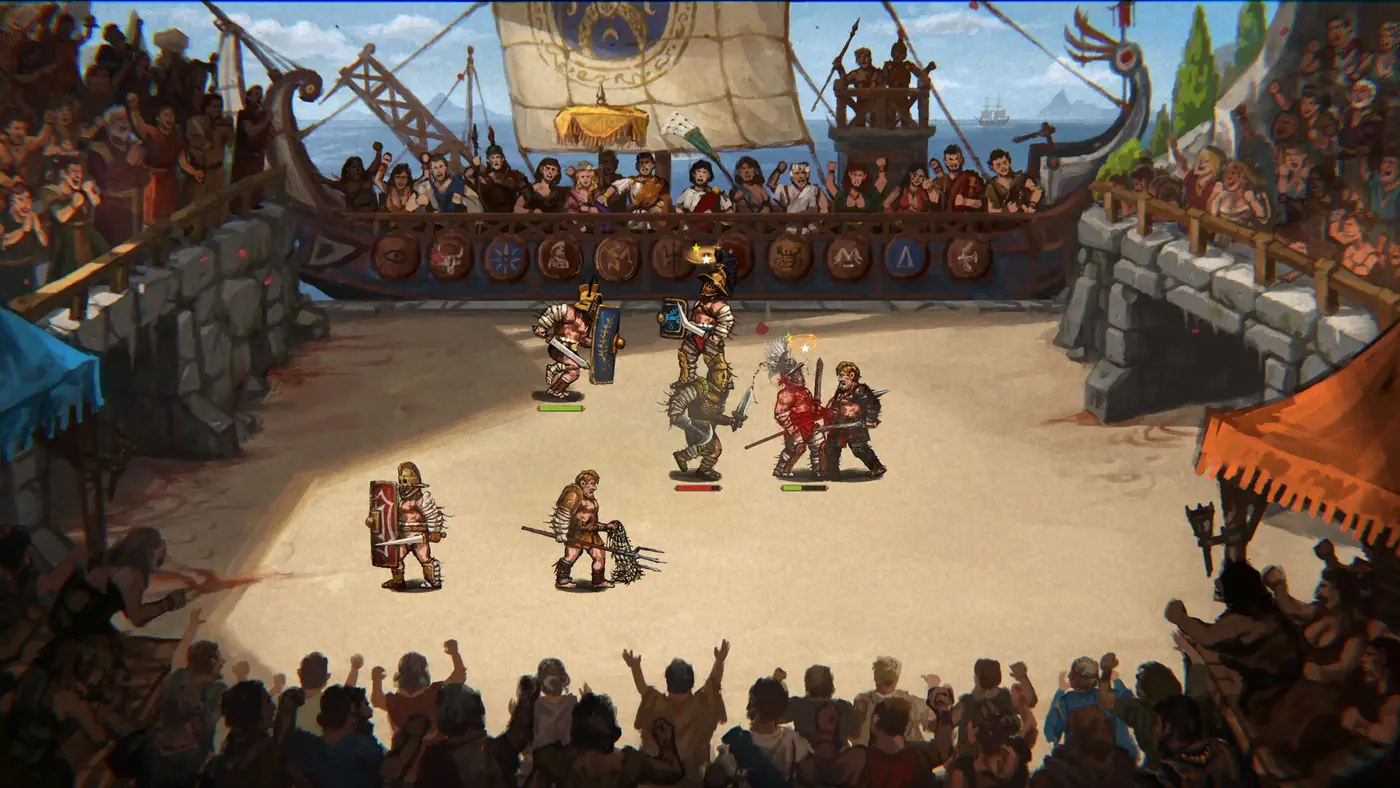
Class - Murmillo, Secutor or Scissor for the player; Retiarius and Hoplomachus appear as opponents. Class determines the shield profile and class skills.
Talent - an innate trait such as Fast Learner, Rapid Recovery, Charismatic, Harden or Failed.
Temperament - a behavioural tendency such as Balanced or Hot-Blooded.
Fatigue - a 0-5 counter. Wins add 1, losses add 2. At 3/4/5 the arena injury risk is 25/50/100%.
Health - the damage pool. Base Health is shown on the recruit card and grows with level-ups and Veteran bonuses.
Morale - the mood stat. High morale unlocks positive traits; low morale causes theft, refusal and a suicide risk.
Readiness - the combined state of Fatigue, injuries, Health, morale, crowd and matchup before a fight.
Crowd favor - the audience mood: Liked, Indifferent or Disliked. It determines how many of your two crowd calls help.
Freedom Goal - the number of victories a gladiator needs to earn freedom (for example 0/12 or 0/16).
Veteran - a gladiator with seven victories who chooses a permanent Health or Damage bonus.
Injury - a combat wound that requires Infirmary time. Injuries are revealed on return to the Ludus.
Infirmary - the healing building. Early exit removes only the injuries covered by the time served and restores pre-admission Fatigue.
Quarters - the Gladiator Quarters, a building that speeds Fatigue recovery. Purchase 30, usage 2 in the build I checked.
Palus - a training post that raises training speed by 20%. Purchase 60, construction 1 day.
Pleasure House - the morale recovery building.
Temple - the prayer/morale building and the source of the Favor of the Gods achievement.
Doctore - the training staff hire (80 coins). The whip doubles training speed for two days.
Procurator - the contract staff hire. Patch 3 lets the Procurator choose a contract.
Ordinator - the exhibition staff hire, added in Patch 6.
Faber - the equipment-protection staff hire, tied to the Built to Last achievement.
Venator - the hunt staff hire (45 coins), tied to The Hunt Begins achievement.
Agent - a staff hire whose exact effect was not captured in the build I checked. Read the hire card before spending.
Slave Trader - the staff hire that enables a Sword for Hire.
Contract - an arena fight with a purse, rules, crowd and opponent. Post-game contracts come in batches of ten.
Exhibition - a low-stakes fight arranged by the Ordinator. Base reward 20 coins plus 3 per arena victory.
Grand Tournament - the end-of-campaign final after 165 days against the six rival Domini.
Beast spectacle - a post-game contract featuring lions or elephants, with a higher purse and a different risk profile.
Retire as Dominus - the post-game ending summary.
Key numbers
| Value | Number | Source |
|---|---|---|
| Campaign length | 165 days | Store / difficulty screen |
| Daily upkeep | 1 + 1 per gladiator | GENERAL tab |
| Starting recruit band | 85/100/115 Health for 35/50/65 coins | Patch 4 |
| Fatigue range | 0-5 | INFO card |
| Fatigue injury risk | 25/50/100% at 3/4/5 | Patch 3 |
| Base injury chance | 10% win / 40% loss | Patch 1 |
| Quarters | 30 purchase / 2 usage | Build panel |
| Palus | 60 purchase / +20% training | Build panel |
| Doctore | 80 coins | Staff panel |
| Venator | 45 coins | Staff panel |
| Exhibition base | 20 coins + 3 per arena win | Patch 7 |
| Post-game contract batch | 10 fights, 1v1-5v5 | Day 1 notes |
Values marked from the build panel are UI observations; values marked from patch notes are official changes. The game may rebalance after this page's last update.
Official source: Dominus Gladiatus patch notes ↗
Buildings and staff reference
Buildings:
- Gladiator Quarters - Fatigue recovery.
- Infirmary - injury healing.
- Palus - +20% training speed.
- Pleasure House - morale recovery.
- Temple - prayer and morale.
Staff:
- Doctore - training speed.
- Procurator - contracts.
- Ordinator - exhibitions.
- Faber - equipment protection.
- Venator - hunts/commodities.
- Slave Trader - Sword for Hire.
- Agent - support hire; effect not captured.
The staff and buildings guide → explains the purchase order.
Classes reference
| Class | Role | Signature |
|---|---|---|
| Murmillo | Shield tank | Large rectangular shield, forgiving defence |
| Secutor | Balanced answer | Shield Guard, Outmaneuver, Backstab, Net Breaker |
| Scissor | Aggressive brawler | Headbutt stun, Brutal Kick knockback |
| Retiarius | Opponent | Net control; countered by Net Breaker |
| Hoplomachus | Opponent | Spear range, Sand in the Eyes |
The classes guide → covers matchups.
Arena rules reference
- Until Surrender: the fight ends when one side yields. Safer for your main fighter.
- To the Death: the fight continues until a fighter dies. Higher risk, higher narrative stakes.
- Crowd calls: two per match. Liked answers both, Indifferent answers one, Disliked answers none.
- Ruthless crowd: starts Indifferent or Disliked, never Liked.
The arena readiness checklist → turns these rules into a pre-fight routine.
Source hierarchy
This wiki uses three source types:
- Official: Steam store text and patch notes. Highest confidence.
- Observed: values read from the release-build UI or a full-run video. High confidence for the build date, but may change.
- Inference: matchup logic and strategy derived from the systems. Useful, but not a hidden formula.
When a guide says "in the build I checked," it is an observation. When it says "Patch X," it is an official change. When it says "the natural counter," it is inference.
Official source: Dominus Gladiatus store page ↗
Official source: Steam achievements ↗
FAQ
Is this an official wiki? No. It is a player reference for the release build, with sources listed on each page.
How often is it updated? After major patches or when a documented value changes. The last update is shown in the page metadata.
Where do the numbers come from? Steam patch notes, the release-build UI and a full 165-day Ruthless run. Each page labels the source type.
Does the wiki cover post-game content? Yes. The endgame contracts page covers the 10-fight batches, beast spectacles and retirement.
More Dominus Gladiatus Guides
Dominus Gladiatus best build guide: Health vs damage, skill order for Murmillo, Secutor and Scissor, Veteran bonuses, equipment priorities and team-fight roles.
Dominus Gladiatus best gladiators tier list: Health, talents, temperament and class value, plus when to buy, keep or sell a recruit from the Slave Market.
How crowd favor works in Dominus Gladiatus: Liked, Indifferent and Disliked calls, two calls per fight, stones and food, favored immunity and Ruthless rules.
All six Dominus Gladiatus Domini: Titus Aurelian, Khepri Setekh, Cassius Lysandros, Aurelia Zahara, Livia Calpurnia and Decimus Amborix, powers and counterplay.
Twelve Dominus Gladiatus tips that prevent early run deaths: fatigue management, market discipline, morale warnings, crowd calls and upkeep traps.
How Dominus Gladiatus endgame contracts work after the Grand Tournament: 10-fight batches, 1v1 to 5v5, beast spectacles, rising upkeep and retirement.
Dominus Gladiatus equipment guide: weapon, shield, helmet, legs, armband and pants stats, block chance vs damage reduction, weapon range and spending priority.
How exhibition matches work in Dominus Gladiatus: Ordinator setup, 20-coin base reward, +3 per arena win, cooldowns and when the low-risk income is worth it.